Lucknow: The invitation arrived quietly, the way the best invitations do. Not a promotional blast or a social media announcement, but rather a personal request: come sit with us for an evening. Come slow down. On August 22, Lucknow hosted ‘Roohaniyat – Ek Mehfil’—a gathering that promised something increasingly rare in our hurried lives: a chance to simply be present.
The event, weeks in preparation, was designed as an antidote to the noise. No high production values, no stage lights cutting through darkness, no rush to the next thing. Just an intimate space where people could step away from the constant pull of everyday demands and settle into something more contemplative. There’s a particular wisdom in that kind of curation, in deciding that warmth matters more than spectacle.

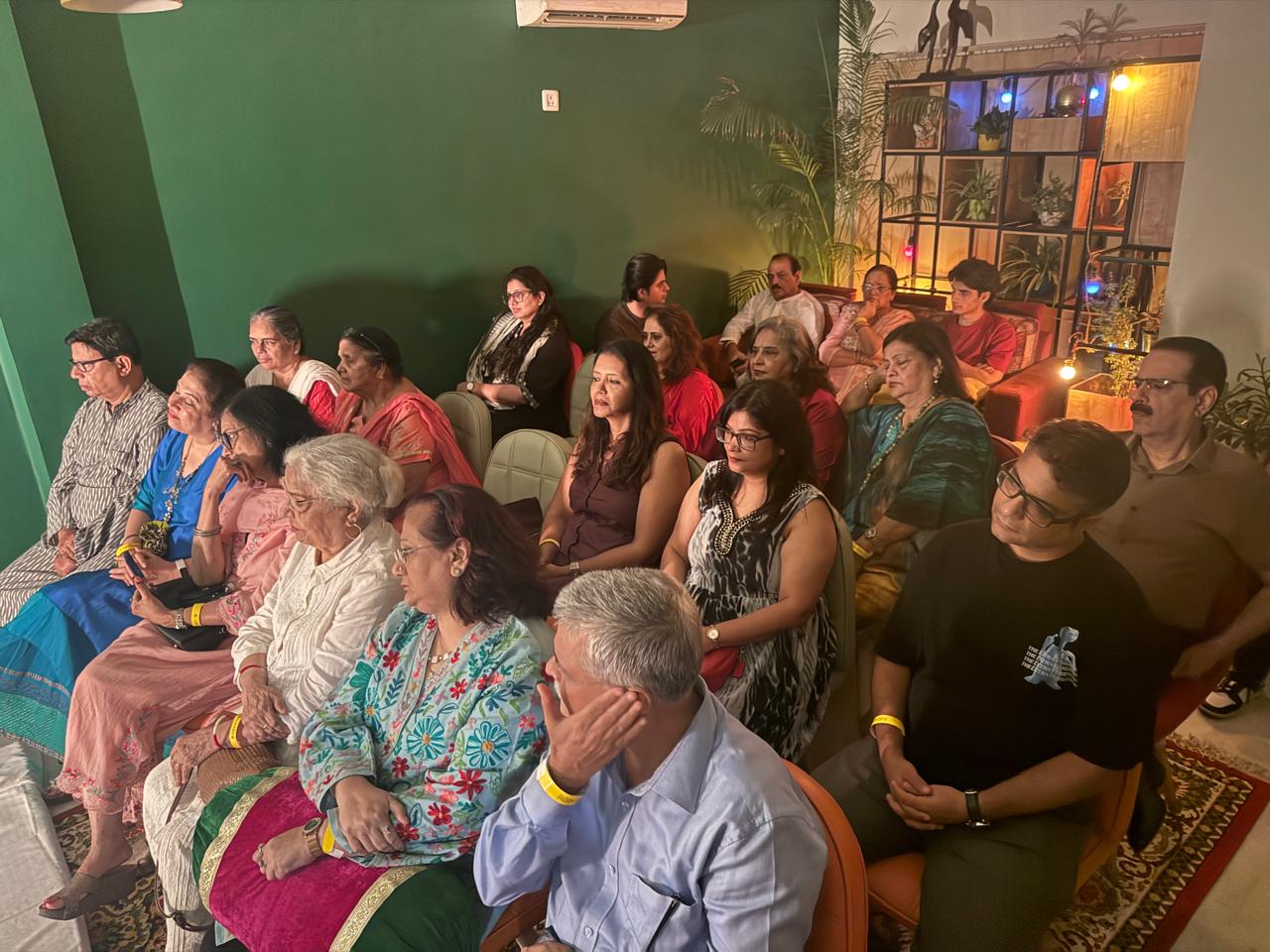
The evening unfolded in layers. Music drifted through the gathering, not demanding attention but offering it—something to lean into if you wanted, to let wash over you if you didn’t. People arrived and gradually found their way to conversations that seemed to happen naturally, as if the space itself invited a certain kind of honesty. There were strangers here, but the atmosphere quickly made that irrelevant.
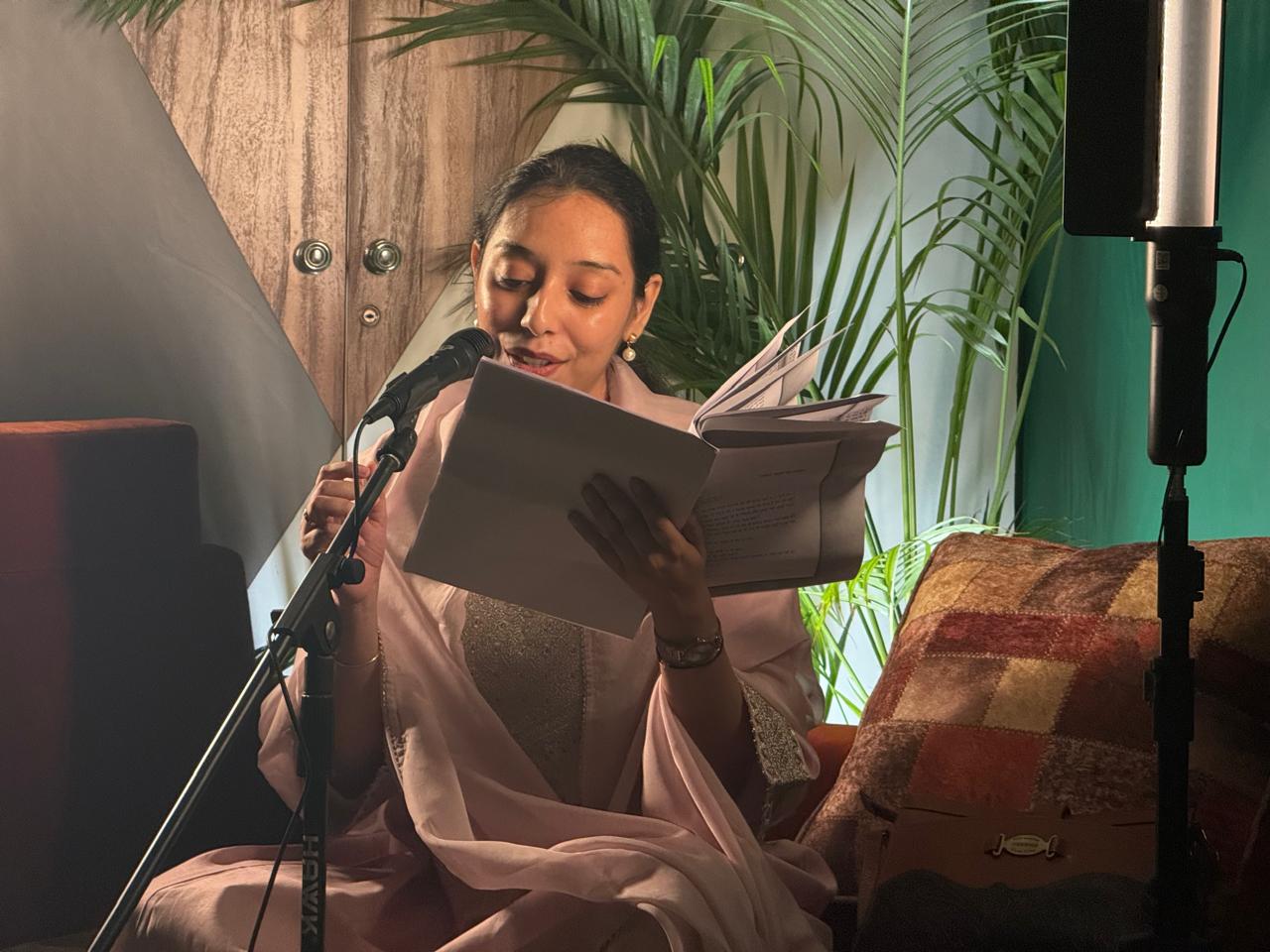
Then came the storytelling. Dr. Pragya Sharma, a renowned Indian storyteller, took the gathering into the Qissagoi tradition—the art of narrative performance that belongs to centuries of Indian culture, where a skilled teller can make you feel the texture of a moment, the weight of memory, the subtlety of human experience. In an age where so much narrative comes to us pre-packaged and mediated through screens, there was something almost shocking about the directness of it—a human voice, a gathered crowd, stories that required presence to fully land.
But perhaps the most grounding element was also the simplest: food. ‘Maa ka Khana’—mother’s cooking—sat at the heart of the evening. Homemade dishes carry something that catered meals, no matter how beautifully plated, cannot quite match. There’s the labour of preparation that speaks through taste, the care embedded in every choice of spice and ingredient. People gathered around the food the way food naturally draws people, and conversations deepened in that way they do when people are eating together.
Event organiser Runjhun Nupur spoke about what they hoped the evening would give: “We want everyone who comes here to leave with some beautiful memories and a little bit of peace and serenity.” It’s a deceptively simple goal. In a city the size and pace of Lucknow, in a world that seems engineered to fragment attention, the ambition to create even a few hours of genuine calm feels almost radical.


The organisers had their own philosophy about what they were creating. “Roohaniyat is not just an event,” they explained. “It is a beautiful excuse to sit together, listen, feel and pause for a while.” There’s honesty in calling it an ‘excuse’—acknowledging that in modern life, we often need permission to do the things that feel nourishing. We need to be given space, explicitly invited, before we allow ourselves to simply sit and listen and be present with others.
What emerged from the evening seemed to be exactly what was promised: a gathering of people who came as themselves, who stayed present through music and story and food, who had conversations that probably wouldn’t have happened in more formal settings. There was no agenda beyond creating an atmosphere where those things could happen. No transactions, no performances, no need to be anywhere else.
In Lucknow’s calendar of expos and medical conferences, cultural events and shopping festivals, Roohaniyat occupied a different space entirely. It wasn’t large-scale or ambitious in the conventional sense. It was intimate. It was intentional. It was, in the truest sense, a mehfil—a gathering held together not by logistics but by shared understanding that this time, this space, this particular combination of music and story and food and company, mattered.
The city has plenty of noise. Events like this one offer something quieter, something that trusts that slowness has its own kind of power. That stories told aloud still move us. That food made with care still nourishes something beyond hunger. That sitting together, without agenda, is enough.
Those who left that evening carried with them what Runjhun Nupur hoped they would: some beautiful memories, and perhaps, a moment or two of that harder-to-find commodity—a little bit of peace.












 https://www.youtube.com/watch?si=RtToJsBhYBatUrym&v=mOuYNSdhjHA&feature=youtu.be